Fentanyl awareness secures spot at Extra Innings Festival
- Feb 20
- 4 min read
Brisa Karow | Published by The Lumberjack
March 8, 2024
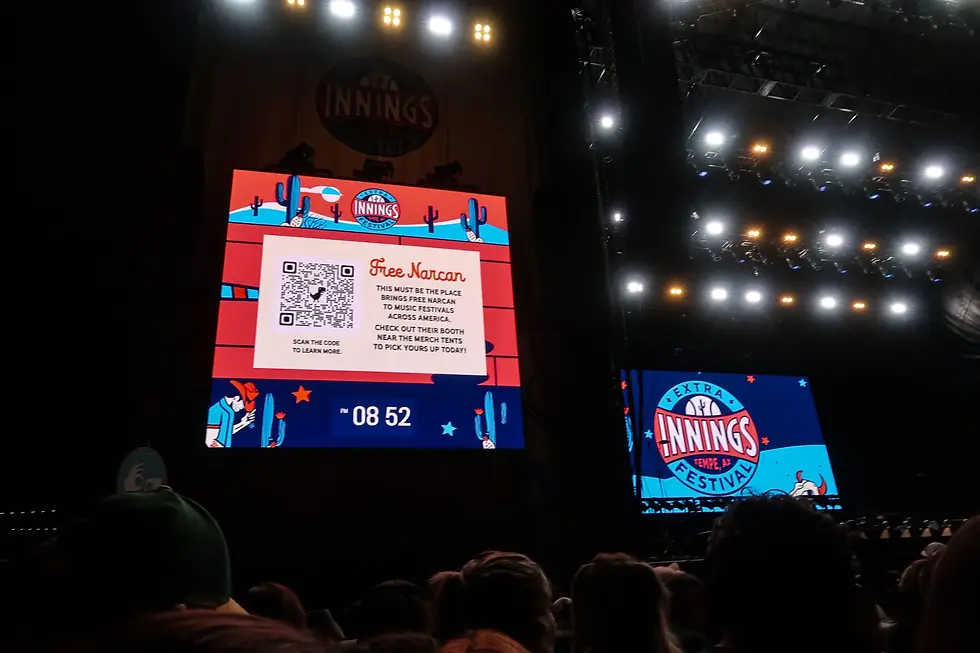
At the Extra Innings Festival in Tempe, Arizona last weekend, an overdose prevention booth joined food and entertainment vendors to spread awareness about fentanyl and offer free resources to the music festival crowd.
Last year, the United States saw the highest number of fatal opioid overdoses, with more than 112,000 deaths. The prevalence of synthetic drugs — most notably fentanyl — has put pressure on the need to solve the ongoing issue.
This Must Be The Place, a nonprofit based out of Columbus, Ohio, attended both weekends of Tempe’s baseball-themed music festival, providing free naloxone kits and resources about reversing the effects of an opioid overdose. The main takeaway they stress is carrying the medication can save someone’s life.
Naloxone is a medication that treats an overdose when given promptly. It is commonly referred to as Narcan, one brand of naloxone. An opioid antagonist, naloxone binds to opioid receptors and temporarily reverses or blocks the effects of opioids. It comes in the form of an injectable solution or a nasal spray, the kind Be The Place distributes.
Ingela Travers-Hayward, who started Be The Place with her husband, is in her third year of touring the country for the nonprofit. In 2022, the couple attended local venues in Ohio and made it to eight festivals. This year, they will appear at 37 festivals and plan to pass out 50,000 kits.
They visit major music and art festivals, including Coachella and Burning Man, and hand out free naloxone provided by Hikma Pharmaceuticals. Be The Place’s goal moving into this year is to normalize people carrying the medication, no matter the circumstance.
While many people who come to Travers-Hayward’s booth collect naloxone to stay prepared at music events, she said others take kits to carry after they leave the event.
“The reality is it’s EDM, country music, rock music, indie music, hip hop, all of these genres, it doesn’t matter,” Travers-Hayward said. “Everyone who listens to music should be carrying. Everyone in the world should be carrying this. Music just becomes a way to get it to them in this really easy way.”
At Extra Innings, festival-goers surrounded her booth between music sets. Travers-Hayward was joined by volunteers who helped her demonstrate using naloxone in a life-threatening situation.
She emphasized giving naloxone to someone will never hurt them, even if they are not overdosing.
Calling paramedics is the first step, and administering the medication follows. The small device must be inserted into one nostril and the plunger pressed down. The individual should wake up 30 to 90 seconds later, and in case they throw up, Travers-Hayward advises bystanders to turn the person on their side. Until emergency responders arrive, people should try to keep the person awake and breathing.
Be The Place also asks people to participate in a survey about their experience with overdoses and using the medication.
From the data they collect across the country, Travers-Hayward said half the individuals they speak to have overdosed or knew someone in their close social circle who had. A majority of them did not have access to naloxone when an overdose occurred.
According to the Centers for Disease Control and Prevention, 67% of drug overdose deaths in 2022 had at least one opportunity for intervention, with almost half the overdoses having a potential bystander present.
Data from the Arizona Department of Health Services shows from the beginning of this year, there have been 24 confirmed opioid deaths and 388 verified non-fatal opioid overdose events. On average, more than five people die every day in Arizona from overdoses.
Attorney General Kris Mayes has pushed actions recently to tackle the fentanyl epidemic in Arizona and encouraged youth to have conversations about the drug.
“Fentanyl’s potency and low cost means it is often laced with other illicit or counterfeit drugs,” Mayes said in a January press release. “We want every young person in Arizona to know how to protect their friends and themselves from fentanyl.”
A person administering naloxone has legal protection under the Good Samaritan Act to intervene if they see a person experiencing an overdose. Most states have Good Samaritan and Naloxone Access laws to reduce the number of deaths and increase response to opioid overdoses. Arizona’s Good Samaritan law has been in effect since 2018.
Be The Place distributes the brand Kloxxado, which has the equivalent of two doses of Narcan. The higher dosage fights stronger opioid doses, including that found in fentanyl.
According to the U.S. Drug Enforcement Administration, fentanyl is 100 times more potent than morphine and 50 times more than heroin.
Travers-Hayward said people are not aware enough of how far-reaching fentanyl is in drugs, and anything from MDMA to Adderall can be laced with it.
“What we frequently tell people is unless it came from the pharmacist, you can’t be sure that the pill you’re taking won’t be a fake one that will have fentanyl,” Travers-Hayward said.
Mayes has announced multiple overdose preventative measures centered around fentanyl in the past few months. In December, her office ordered more than 55,000 units of naloxone from Teva Pharmaceuticals to be distributed to Arizona counties in the next two years based on the highest need. The first order will roll out in June.
“The option of ordering naloxone means that we can help prevent overdoses, especially as one fentanyl pill can kill,” Mayes said in a December press release.
In late January, she announced a fentanyl public service announcement competition to raise awareness of the drug. Open to college students, it intends to increase youth engagement in education efforts.
The same week, she announced the seizure of a half-million illicit fentanyl pills.
Travers-Hayward said getting access to naloxone is the hardest part. From there, seeing how many people want to save someone’s life motivates her to keep distributing naloxone.
“A lot of people, if not the majority of people, who come up to our booth want to carry this stuff, not necessarily because they know someone who uses drugs, but just to keep people of the world safe, to keep strangers safe,” Travers-Hayward said.
To find where free naloxone is distributed in the U.S., visit the National Harm Reduction Coalition’s website. In Flagstaff, North Country HealthCare offers free naloxone and naloxone training.
More naloxone resources can be found on This Must Be The Place’s website.


Comments